
Introduction
Irvine is one of the most competitive real estate markets in Southern California. Buyers here are savvy, well-researched, and move fast when the right home hits the market. But even in a high-demand city like Irvine, an overpriced listing will sit. And a home that sits collects something you don't want: stigma.
Pricing your home correctly from day one is the single most important decision you will make as a seller. It determines how many buyers walk through your door, how quickly you receive offers, and ultimately, how much money you walk away with at close. Get it right, and you could spark a bidding war. Get it wrong, and you could spend months chasing the market down.
Here is what every Irvine seller needs to know before setting a list price.
Understand What "Correctly Priced" Actually Means
There is a common misconception that pricing high gives you room to negotiate. In reality, it just gives buyers a reason to scroll past your listing.
A correctly priced home is one that reflects current market conditions, comparable sales in your specific neighborhood, and the genuine condition of your property. In Irvine, that analysis needs to be hyperlocal. Pricing a home in Northwood the same way you would price one in Woodbridge or Quail Hill is a mistake. Each village has its own demand drivers, HOA dynamics, school assignments, and buyer pool.
The goal is to price your home at the intersection of what the market supports and what creates urgency for buyers.
Pull the Right Comparables
A Comparative Market Analysis (CMA) is the foundation of smart pricing. Your agent should pull sold comps from the last 60 to 90 days, within a tight radius of your home, with similar square footage, lot size, bed and bath count, and condition.
In Irvine, pay close attention to:
- School district boundaries. Homes zoned for Irvine Unified School District carry a premium, and certain schools within IUSD command even more.
- HOA amenities. Gated communities, resort-style pools, and newer construction add perceived value that needs to be reflected in the analysis.
- Active vs. sold listings. Active listings show you what you are competing against. Sold listings show you what buyers actually paid. Never price based solely on what your neighbors are asking.
A strong CMA does not just hand you a number. It tells a story about where your home fits in the current market landscape.
Account for Current Market Conditions
Irvine's real estate market can shift quickly. Interest rate changes, seasonal inventory fluctuations, and broader economic signals all affect buyer behavior. What worked six months ago may not apply today.
Before you list, ask your agent these questions:
- How many days are homes in my neighborhood sitting on market right now?
- Are homes selling above, at, or below list price?
- Has inventory increased or tightened in the last 30 days?
The answers to these questions should directly inform your pricing strategy. In a tight inventory environment, pricing at or just below market value can generate multiple offers and drive the final sale price up. In a slower market, precision matters even more. An overpriced home in a cooling market is the hardest situation to recover from.
Avoid the Three Most Common Pricing Mistakes
1. Pricing for your mortgage, not the market. What you owe on your home has no bearing on what buyers will pay. The market does not care about your financial goals. It cares about value.
2. Skipping the pre-listing prep. Condition affects price. A home that shows beautifully, with fresh paint, clean landscaping, and updated fixtures, commands more than a dated home priced identically. Before you set a number, make sure your home earns it.
3. Anchoring to your neighbor's list price. Their home may be overpriced. It may have features yours does not. It may have been sitting for 60 days for a reason. Use sold data, not wishful thinking.
The Cost of Overpricing
Every week a home sits on the market, buyer interest erodes. Irvine buyers watch listings closely. They notice when a home reduces its price. They start to wonder what is wrong with it.
Price reductions signal desperation. They invite lowball offers. They cost you negotiating leverage. And they often result in a final sale price lower than what a correctly priced home would have commanded on day one.
The best time to sell your Irvine home is the first two weeks it is on the market. That is when buyer activity peaks. Price it right, and you capture that momentum. Price it wrong, and you spend the next three months trying to get it back.
Work With an Agent Who Knows Irvine Intimately
Irvine is not a market where a generalist will serve you well. You need an agent who understands the nuances of Portola Springs vs. Orchard Hills, who knows which floor plans in Stonegate are commanding premiums right now, and who has a track record of pricing homes that sell fast and for top dollar.
The right agent does not just give you a number. They give you a strategy.
Conclusion
Pricing your Irvine home correctly is part data, part strategy, and part timing. It requires an honest assessment of your home's condition, a clear-eyed look at comparable sales, and a strong understanding of where the market stands right now.
Done right, it is also the fastest path to a successful sale.
Ready to find out what your Irvine home is worth in today's market? Let's talk. A complimentary pricing consultation takes 30 minutes and could be worth thousands at the closing table.
FROM OUR BLOG
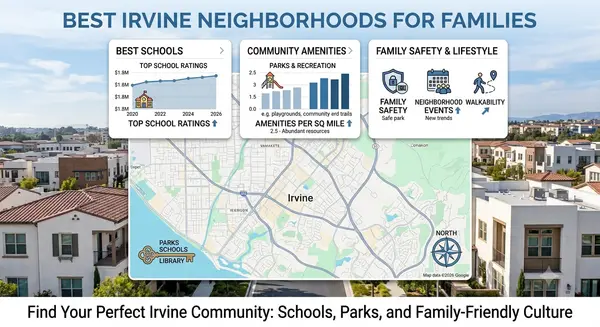

Irvine Condos and Townhomes Near Irvine Spectrum and the Irvine Business Complex: 2026 Buyer's Guide
Search interest in Irvine condos consistently clusters around two areas: the Irvine Spectrum and the Irvine Business Complex (also called the Airport Area or IBC). Both offer a different lifestyle than Irvine's family-oriented villages: walkable, amenity-rich, and built for buyers who want a lower-m
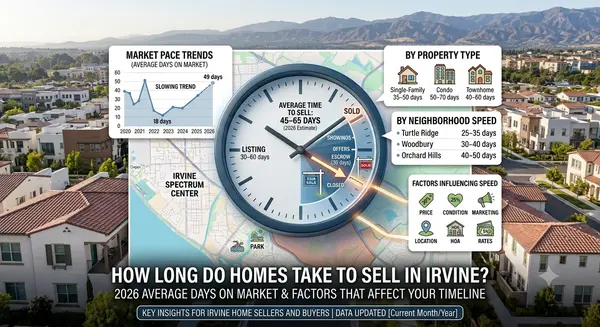
How Long Do Homes Take to Sell in Irvine? Days on Market Explained (2026)
"How fast do homes sell in Irvine" is one of the most-searched real estate questions in the city, and the honest answer is: it depends heavily on price tier, village, and how the home is priced from day one. Here's what the current data actually shows. The Citywide Number Days on market in Irvine ha
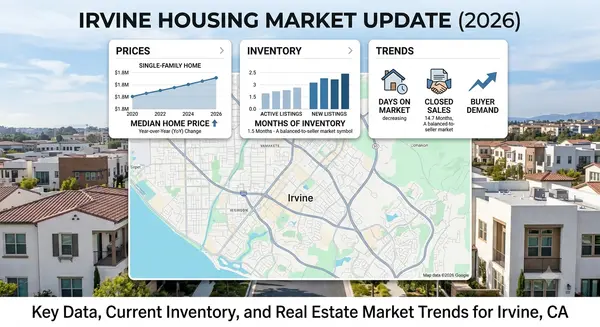
Irvine Housing Market Update: Prices, Inventory, and Trends (2026)
Irvine's real estate search traffic tells a consistent story: people want to know what homes cost right now, which villages fit their family, and how fast the market is moving. This post covers the citywide numbers, using the most current, clearly-dated figures available, and flags where trackers di